
Bukit Lawang Night Trek: Ethical Nocturnal Hike to Search for the Slow Loris in Gunung Leuser National Park.
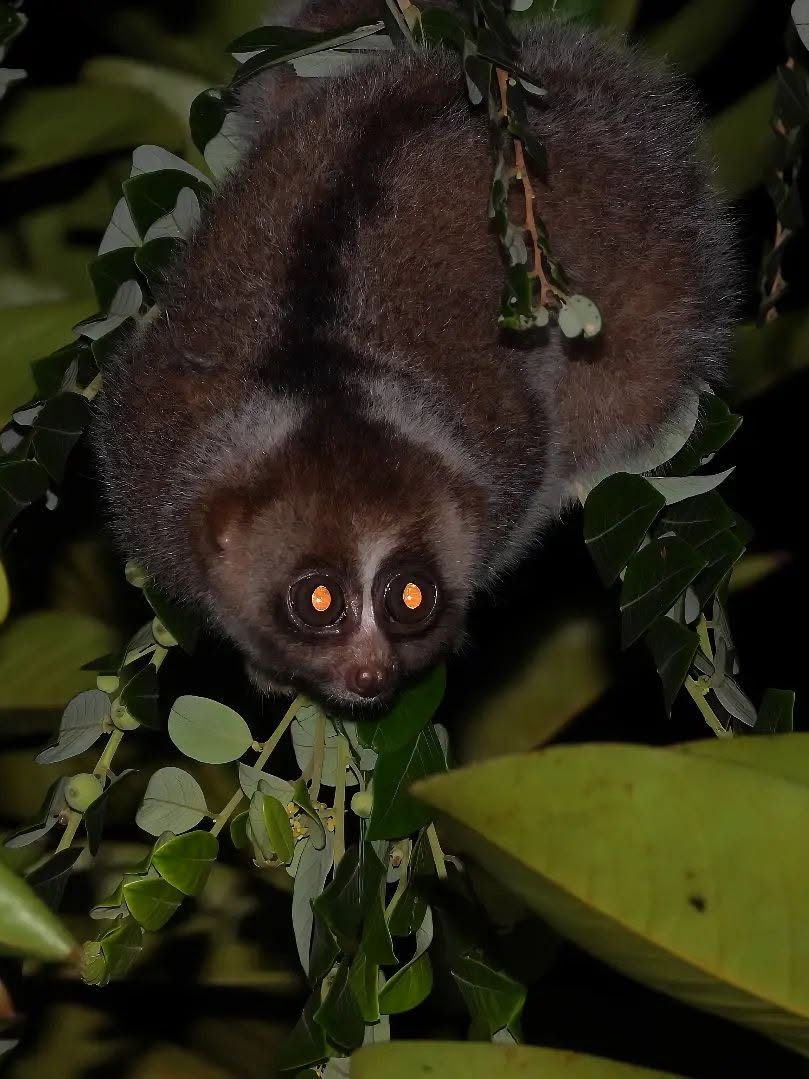
When the sun sets over Bukit Lawang, the rainforest transforms into an entirely different world. The daytime chorus of gibbons, hornbills, and orangutans fades, while the mysterious sounds of frogs, insects, owls, and nocturnal mammals begin to fill the forest. A Bukit Lawang Night Trek offers an unforgettable opportunity to discover this hidden side of the rainforest and search for one of Southeast Asia’s most fascinating primates—the Sumatran Slow Loris (Nycticebus coucang).
Led by experienced local guides, our ethical night walks provide a unique chance to observe nocturnal wildlife while supporting conservation and responsible ecotourism in Gunung Leuser National Park, one of the world’s richest tropical rainforest ecosystems. Slow lorises are nocturnal, arboreal primates with large eyes adapted for night vision, and they are among the world’s only venomous primates.
Why Join a Night Trek in Bukit Lawang?
Most visitors come to Bukit Lawang hoping to see wild orangutans during the day. However, once darkness falls, an entirely new ecosystem awakens.
Our guided night walk allows you to experience:
- Search for the elusive Slow Loris.
- Observe nocturnal mammals in their natural habitat.
- Discover colorful frogs and amphibians.
- Spot geckos, lizards, spiders, and fascinating insects.
- Listen to owl calls echoing through the rainforest.
- Learn about the rainforest ecosystem from experienced local guides.
- Experience the jungle without daytime crowds.
Unlike daytime trekking, a nocturnal hike focuses on patience, careful observation, and respecting wildlife rather than covering long distances.
At Bukit Lawang Ecotourism, we believe wildlife encounters should always put nature first. Every tour contributes to sustainable tourism that helps protect the rainforest and provides income for local communities instead of destructive activities. Sustainable ecotourism has been identified as an important driver of conservation and community livelihoods in Bukit Lawang.
Search for the Elusive Slow Loris
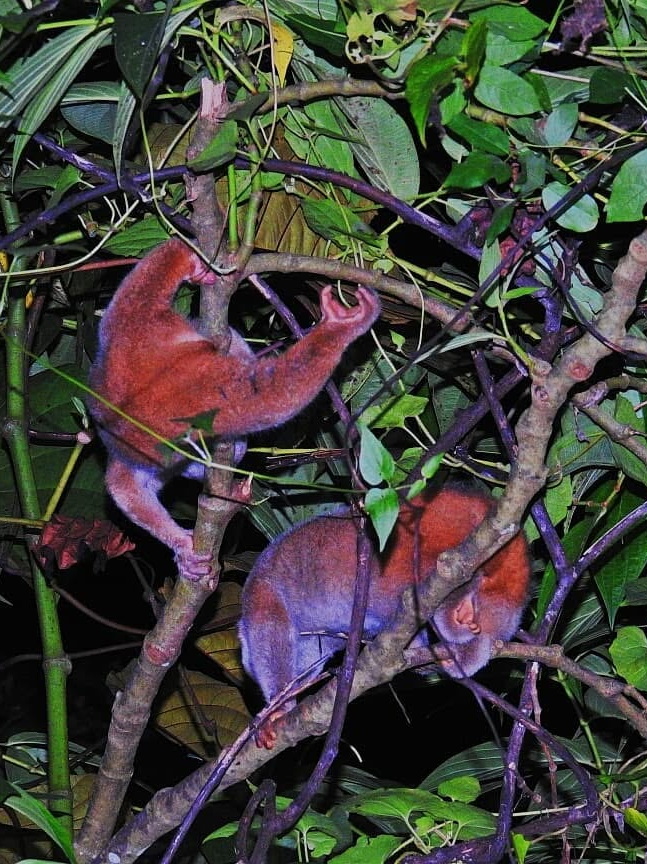
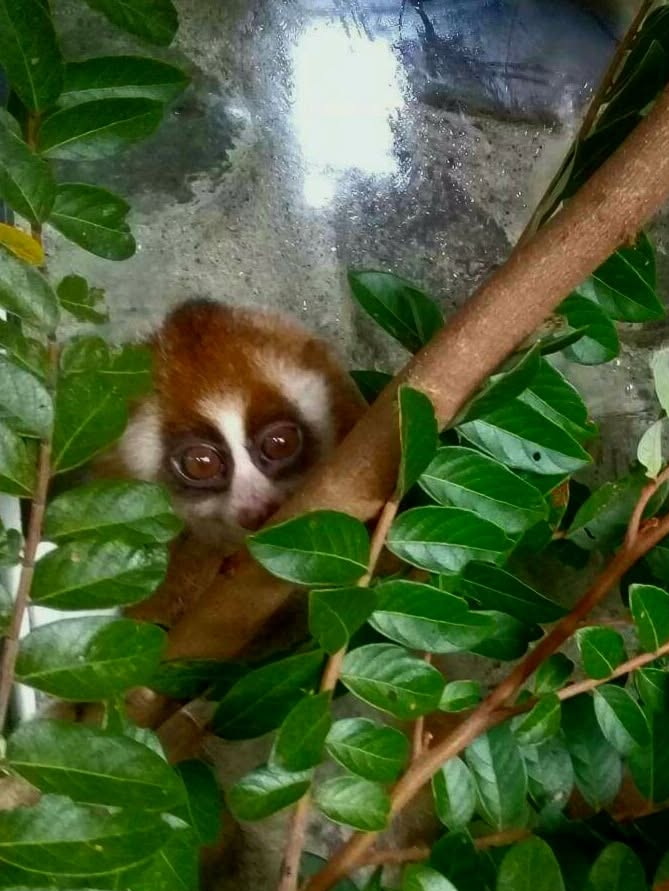
One of the highlights of a Bukit Lawang night trek is the possibility of seeing the slow loris, one of Southeast Asia’s most fascinating nocturnal primates.
With its enormous reflective eyes, careful movements, and remarkable climbing ability, the slow loris has perfectly adapted to life in the rainforest after sunset. It spends much of the night feeding on tree gum, nectar, insects, fruit, and small prey.
Finding a slow loris requires patience, experienced tracking skills, and a little luck. Wildlife sightings are never guaranteed, making every encounter especially memorable.
Our guides never disturb animals simply to provide better photographs. The well-being of wildlife always comes before tourism.
Other Nocturnal Wildlife You May Encounter in Bukit Lawang Night Walk
Every night is different, but depending on weather conditions and seasonal activity, you may encounter:
- Slow lorises
- Civets (Musang)
- Flying squirrels
- Mouse deer
- Tokay geckos
- Tree frogs
- Pit vipers
- Vine snakes
- Stick insects
- Leaf insects
- Giant forest spiders
- Scorpions
- Praying mantises
- Owl species
- Nightjars
- Fireflies
The rainforest truly comes alive after sunset, offering opportunities for wildlife photography and nature observation that few visitors experience. Night walks commonly reveal slow lorises, civets, reptiles, amphibians, insects, and nocturnal birds when conducted responsibly with knowledgeable local guides.
✴︎ Ethical Wildlife Photography
—07.00Pm
RESPONSIBLE PHOTOGRAPHY IS AN IMPORTANT PART OF EVERY NIGHT TREK, OUR GUIDES ENCOURAGE VISITORS TO:
- Avoid repeated flash photography.
- Never block an animal’s escape route.
- Keep noise to a minimum.
- Respect natural behavior.
- Allow wildlife to continue feeding or moving naturally.
A great wildlife photograph should never come at the expense of an animal’s welfare.
Book Your Bukit Lawang Night Trek
Step into the rainforest after sunset and discover a side of Bukit Lawang that few visitors ever see. Whether you are hoping to glimpse a slow loris, photograph a brilliantly colored tree frog, or simply experience the sounds and atmosphere of the jungle at night, our ethical night trek offers an unforgettable adventure rooted in conservation and respect for nature.
SUMECO’s Slow Loris Rescue Efforts.
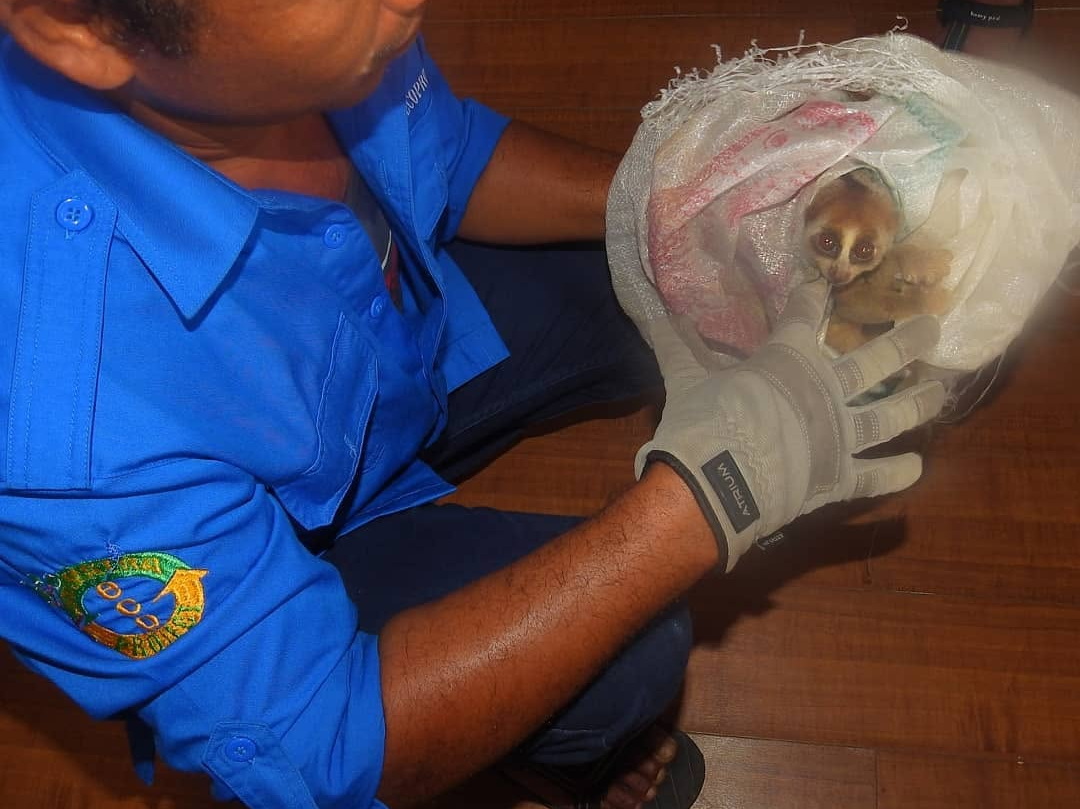
SUMECO responds to reports of illegally kept wildlife around Bukit Lawang, Langkat, Medan, and surrounding areas in collaboration with the authorities responsible for wildlife protection.
Our work includes:
- Receiving reports from local communities.
- Assisting authorities during rescue operations.
- Emergency response for confiscated wildlife.
- Health assessment with partner veterinarians when required.
- Temporary care before transfer or release.
- Habitat assessment.
- Monitoring after release whenever feasible.
- Public education is needed to reduce demand for wildlife as pets.
Since 2014, SUMECO has rescued hundreds of protected animals from illegal captivity, including primates, reptiles, birds of prey, and other wildlife native to the Gunung Leuser ecosystem.
A Slow Loris Returned to the Forest.
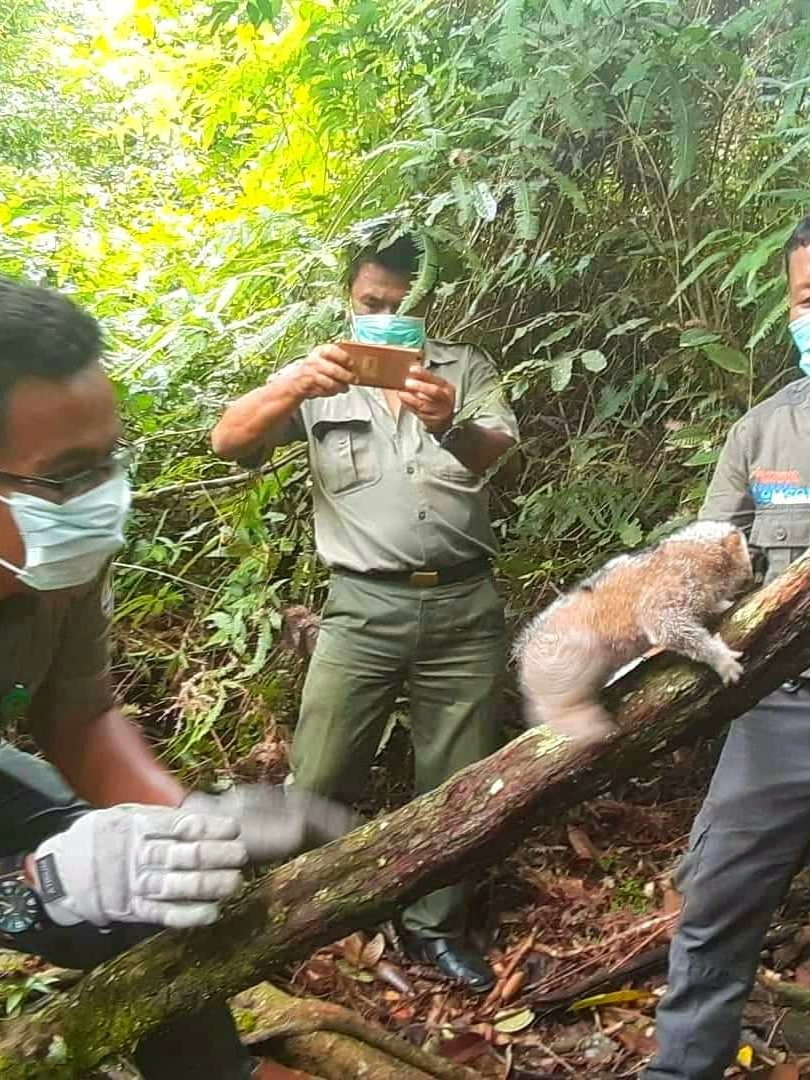
During SUMECO’s Wildlife Conservation Camp, a confiscated slow loris was successfully rescued from illegal captivity and released back into its natural habitat. The rescue demonstrated how cooperation between local conservationists, park authorities, and community members can produce meaningful conservation outcomes.
The operation also highlighted a simple but powerful message:
- Wild animals belong in the rainforest—not in cages or homes.
- Fighting Wildlife Trafficking.
- Rescuing individual animals is only one part of conservation.
SUMECO also investigates wildlife trafficking networks, gathers field information, and works with law enforcement agencies to reduce illegal trade in protected species. Research and field investigations conducted by SUMECO have identified the Sunda slow loris as one of the most frequently trafficked protected primates in Sumatra, with online marketplaces and social media contributing to ongoing illegal trade.
Conservation Through Ecotourism.
SUMECO follows a unique conservation model. Instead of relying primarily on donations, SUMECO funds its conservation activities through profits generated by ethical ecotourism, including:
- Orangutan jungle trekking.
- Night walks.
- Birdwatching.
- Herping.
- Mangrove tours.
- Wildlife Conservation Camp.
Every guest who joins these experiences helps support wildlife rescue, conservation education, and efforts to combat wildlife crime in Sumatra.
How You Can Help Slow Lorises.
You can make a real difference by taking the following actions:
- Never buying or keeping slow lorises as pets.
- Avoiding attractions that use wild animals for photos or entertainment.
- Choosing ethical ecotourism operators that support conservation.
- Reporting illegal wildlife trade to the relevant authorities.
- Sharing accurate information about slow loris conservation is important.
- Every responsible decision helps reduce demand for the illegal wildlife trade.
Why SUMECO Matters.
SUMECO was established with a long-term commitment to protecting the biodiversity of the Gunung Leuser Ecosystem. The organization combines wildlife rescue, conservation education, wildlife crime investigations, and ethical ecotourism to show that sustainable tourism can directly protect endangered species and their habitats.